



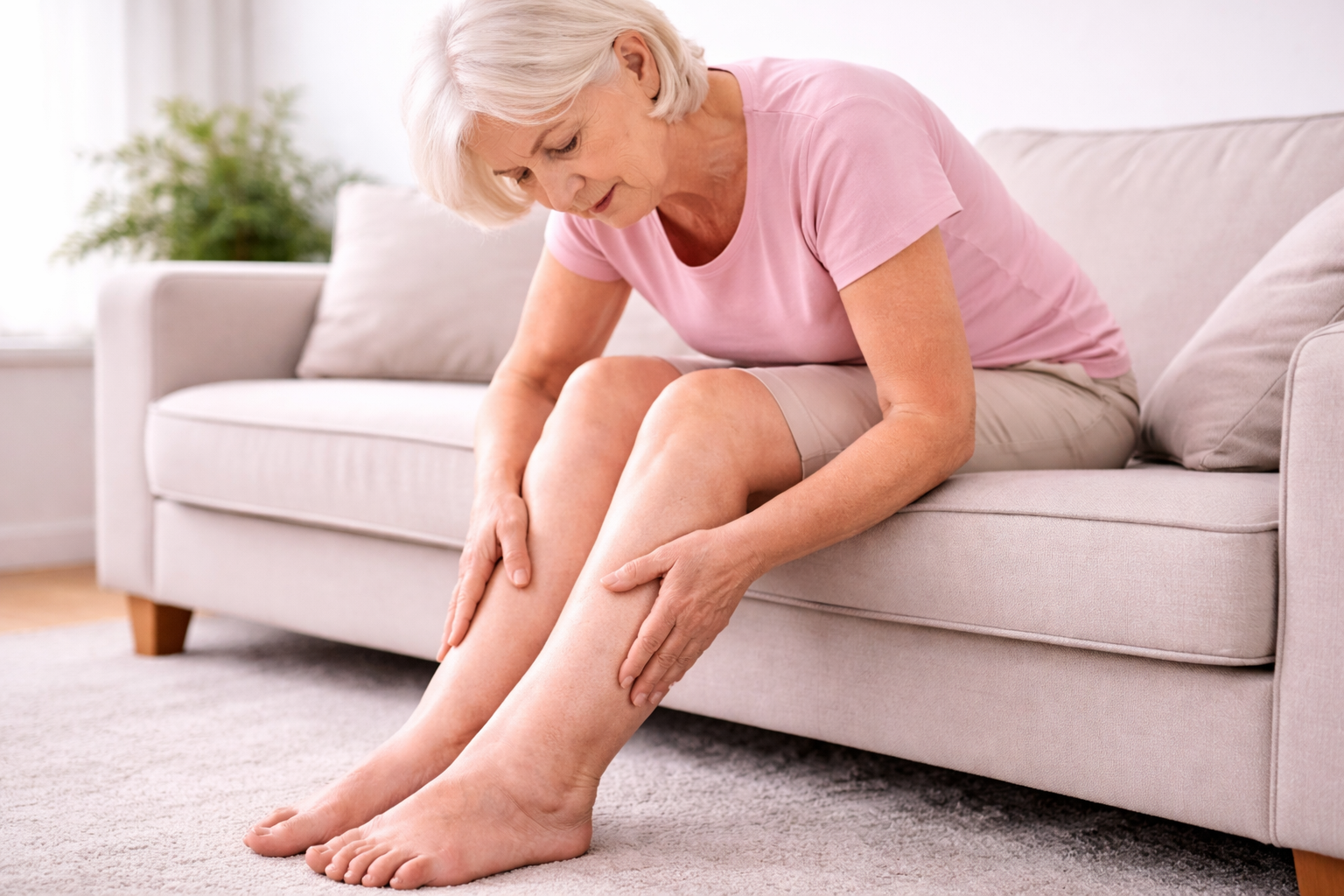
🦵 Schwere Beine und Ödeme
Ursachen, Symptome und Behandlung
⚠️ Was bedeuten schwere Beine?
Das Gefühl von schweren, müden Beinen ist ein häufiges Symptom, das viele Menschen im Alltag betrifft. Oft steckt eine Flüssigkeitseinlagerung (Ödem) dahinter, bei der sich Wasser im Gewebe ansammelt.
Besonders betroffen sind die Beine, da hier durch die Schwerkraft ein erhöhter Druck auf die Venen entsteht.
💧 Was sind Ödeme?
Ein Ödem ist eine sicht- und tastbare Schwellung, die durch Flüssigkeitsansammlungen im Gewebe entsteht. Häufig treten Ödeme an den Unterschenkeln oder Knöcheln auf und verstärken sich im Tagesverlauf.
Typisch ist:
- Schwellung der Beine oder Knöchel
- Spannungsgefühl
- Druckempfindlichkeit
- Eindrückbare Haut (Dellenbildung)
🧬 Ursachen für schwere Beine und Ödeme
Die Ursachen können vielfältig sein:
- Chronisch venöse Insuffizienz (CVI)
- Krampfadern (Varizen)
- Langes Sitzen oder Stehen
- Bewegungsmangel
- Hitze
- Übergewicht
- Hormonelle Einflüsse
- Herz- oder Nierenerkrankungen
In vielen Fällen liegt eine venöse Abflussstörung zugrunde.
🩺 Wann sollte man einen Arzt aufsuchen?
Wenn die Beschwerden regelmäßig auftreten oder zunehmen, sollte eine Abklärung erfolgen.
Die Diagnostik erfolgt durch:
- Gefäßchirurg
- Phlebologe
- Angiologe
Eine Duplexsonographie hilft dabei, die Ursache der Beschwerden genau zu bestimmen.
💊 Behandlung von schweren Beinen und Ödemen
Die Therapie richtet sich nach der Ursache:
Konservative Maßnahmen:
- Kompressionstherapie
- Regelmäßige Bewegung
- Hochlagern der Beine
- Aktivierung der Muskelpumpe
- Gewichtsreduktion
Ergänzende Maßnahmen:
- Vermeidung von langem Sitzen oder Stehen
- Ausreichende Flüssigkeitszufuhr
- Anpassung des Lebensstils
🌿 Unterstützung der Gefäßfunktion
Zur Unterstützung der Venen können zusätzlich beitragen:
- antioxidative Nährstoffe
- pflanzliche Extrakte
- Förderung der Mikrozirkulation
📍 Fazit
Schwere Beine und Ödeme sind häufige Beschwerden, die ernst genommen werden sollten. Eine frühzeitige Diagnose hilft, die Ursache zu erkennen und gezielt zu behandeln.
⚖️ Medizinischer Hinweis (rechtlich empfohlen)
Die Inhalte dieser Webseite dienen ausschließlich der allgemeinen Information und ersetzen keine ärztliche Beratung, Diagnose oder Behandlung.
Individuelle gesundheitliche Entscheidungen sollten stets in Rücksprache mit einem qualifizierten Facharzt getroffen werden, insbesondere einem Gefäßchirurgen, Phlebologen oder Angiologen.
Bei akuten Beschwerden oder Verdacht auf eine ernsthafte Erkrankung (z. B. Thrombose) sollte umgehend eine ärztliche Abklärung erfolgen.