



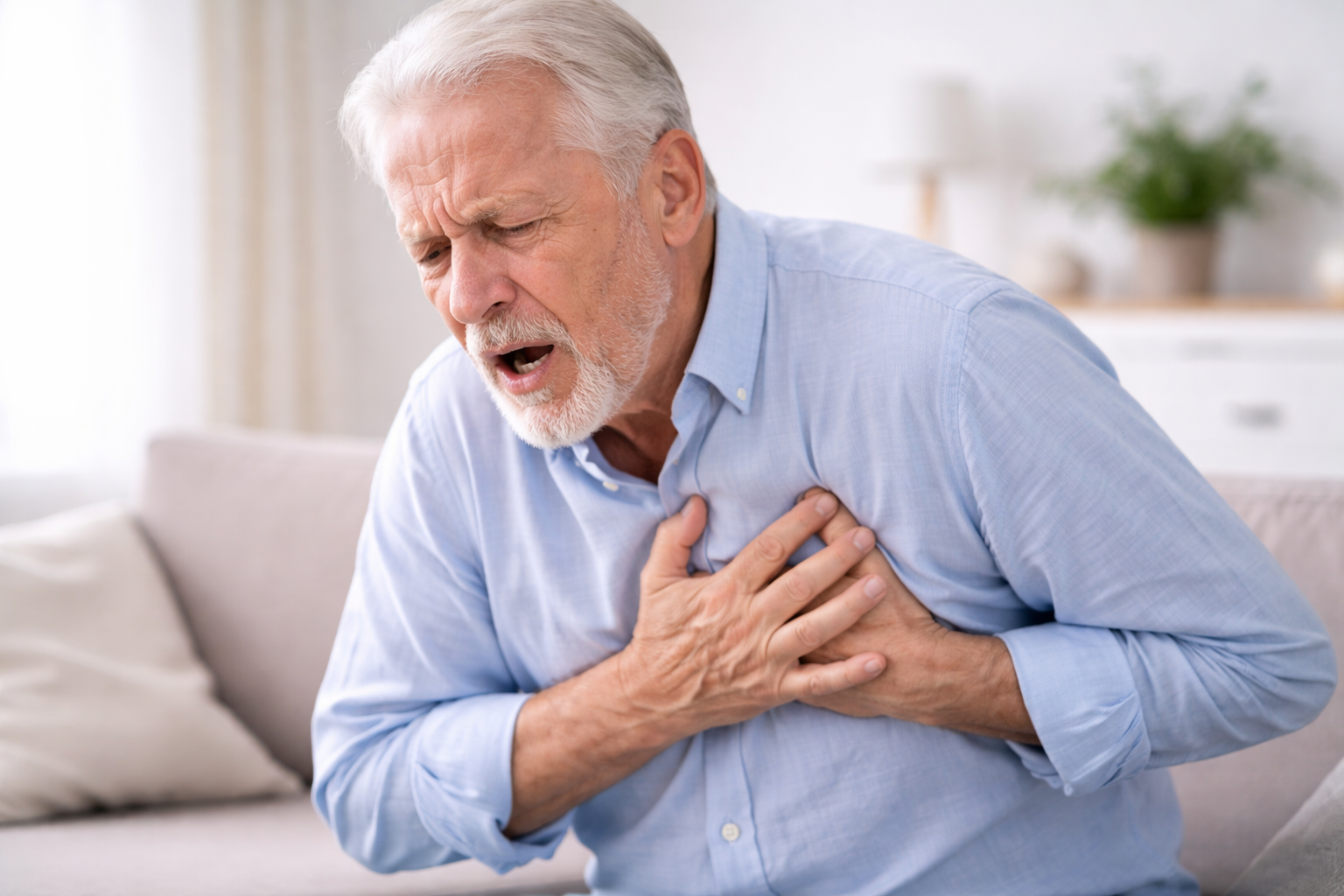
Lungenembolie
(Lungenarterienembolie)
Symptome, Ursachen
und Notfallbehandlung
⚠️ Was ist eine Lungenembolie?
Eine Lungenembolie ist eine akute, potenziell lebensbedrohliche Erkrankung, bei der ein Blutgerinnsel (Embolus) ein Blutgefäß in der Lunge verstopft.
In den meisten Fällen stammt dieses Gerinnsel aus einer tiefen Venenthrombose (TVT) der Beine und wird über den Blutkreislauf in die Lunge verschleppt.
👉 Erfahren Sie mehr über Ursachen, Symptome und Behandlung der Thrombose auf unserer entsprechenden Informationsseite.
🚨 Symptome einer Lungenembolie
Die Beschwerden treten oft plötzlich auf und können unterschiedlich stark ausgeprägt sein:
- Plötzliche Atemnot
- Brustschmerzen (v. a. beim Einatmen)
- Schneller Herzschlag (Tachykardie)
- Schwindel oder Kreislaufprobleme
- Husten, ggf. mit Blutbeimengung
- Angstgefühl oder Unruhe
👉 Wichtig: Eine Lungenembolie ist ein medizinischer Notfall!
🧬 Ursachen und Risikofaktoren
Die häufigste Ursache ist eine Thrombose der Beinvenen.
Weitere Risikofaktoren:
- Längere Immobilität (z. B. nach Operationen, Reisen)
- Bettlägerigkeit
- Krebserkrankungen
- Schwangerschaft
- Hormontherapie (Pille)
- Übergewicht
- Rauchen
🔗 Zusammenhang mit Thrombose
Die Lungenembolie ist häufig die Folge einer unbehandelten oder unentdeckten Thrombose.
👉 → Mehr zur Thrombose: Symptome, Ursachen und Behandlung
Frühzeitig erkannte und behandelte Thrombosen können das Risiko einer Lungenembolie deutlich reduzieren.
🩺 Diagnostik
Bei Verdacht erfolgt eine sofortige Abklärung im Krankenhaus:
- CT-Angiographie der Lunge
- Blutuntersuchung (D-Dimere)
- Ultraschall der Beinvenen
- EKG
💊 Behandlung der Lungenembolie
Die Therapie muss sofort eingeleitet werden:
Medikamentös:
- Antikoagulation (Blutverdünnung)
- Heparin / DOAKs
Bei schweren Verläufen:
- Lysetherapie (Auflösung des Gerinnsels)
- Katheterverfahren
- Intensivmedizinische Überwachung
🛡️ Vorbeugung (Prävention)
Die wichtigste Maßnahme ist die Vermeidung von Thrombosen:
- Regelmäßige Bewegung
- Kompressionsstrümpfe bei Risiko
- Ausreichende Flüssigkeitszufuhr
- Thromboseprophylaxe nach Operationen
🚨 Notfallhinweis
Bei plötzlicher Atemnot, Brustschmerzen oder Kreislaufproblemen sollte sofort der Notruf gewählt werden. Eine Lungenembolie kann lebensbedrohlich sein und erfordert umgehende medizinische Hilfe.
⚖️ Medizinischer Hinweis
Die Inhalte dienen ausschließlich der Information und ersetzen keine ärztliche Beratung. Diagnostische und therapeutische Entscheidungen sollten stets in Rücksprache mit einem Gefäßchirurgen, Phlebologen oder Angiologen getroffen werden.